
The Best Grill Scraper (And What to Avoid)
Compare wire grill brushes, nylon brushes, pumice stones, and wooden grill scrapers. Learn which scraper is safest for your grates and eliminates wire bristle risks.
Maintaining clean cooking grates is one of the most important habits of a great pitmaster. Old grease, burnt food particles, and carbon buildup do not just look unappealing; they trap stale flavors, cause food to stick, and choke off airflow during long cooks.
Choosing the wrong tool to clean your grates can ruin your expensive smoker components or pose a severe safety hazard to your family and friends. Traditional wire brushes are notorious for shedding sharp metal bristles that contaminate food, while cheap scrapers can strip protective enamel coatings right off your grates.
In this guide, we will compare every major type of grill brush and scraper on the market, explain the hidden risks of traditional cleaning tools, and reveal why natural wooden scrapers are the safest, most effective choice for your outdoor setup.
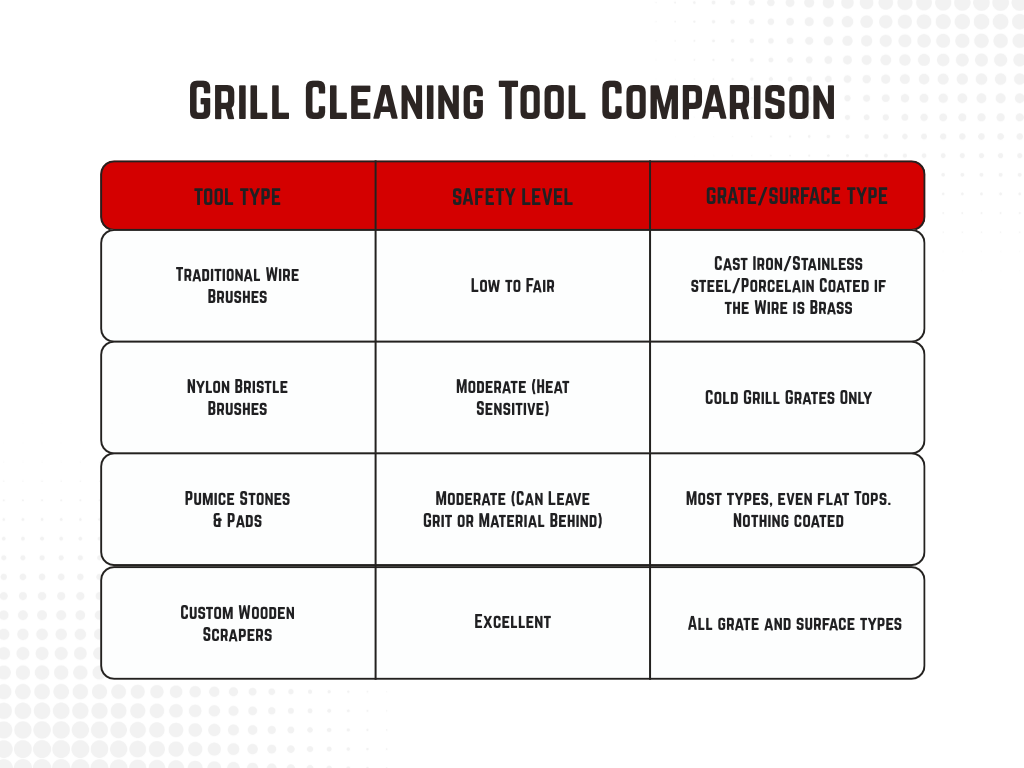
Quick Comparison: Grill Cleaning Tools at a Glance
Before exploring each tool in detail, here is a breakdown of how the most common grill scrapers compare in safety, durability, and performance.
If your smoker grates suffer from heavy carbon buildup after seasoning a new cooker, check out our guide on how to season a new pellet grill or smoker step by step.
The Hidden Danger of Traditional Wire Grill Brushes
For decades, wire bristle brushes were the standard cleaning tool in backyards everywhere. Today, pitmasters and medical professionals strongly advise against using them.
Why Wire Brushes Pose a Hazard
As wire brushes age, exposure to high heat and outdoor moisture weakens the metal bristles. Individual wire strands break off during vigorous scrubbing and lodge into grease on the grates. When you place fresh meat onto those grates, the loose wire bristles stick to your food and can end up swallowed.
Ingesting a loose wire bristle can cause severe digestive injuries, requiring emergency medical attention. Because of this risk, thousands of outdoor cooks are ditching wire brushes entirely in favor of bristle free alternatives.
Evaluating Common Grill Scrapers and Brushes
Understanding the pros and cons of each cleaning method helps you protect both your food safety and your investment in cooking grates.
1. Nylon Bristle Brushes
Nylon brushes eliminate the hazard of metal strands shedding onto your food. However, nylon bristles melt instantly if they touch warm or hot grates. That limits their use strictly to cold grills, making it much harder to remove rendered grease that scrapes off easily while hot.
2. Pumice Stones and Cleaning Pads
Pumice stones break down under pressure to conform to the shape of your grates. While they scrub away grease effectively, they wear down very quickly and leave behind fine abrasive dust. That grit requires a thorough rinse with wet paper towels before you can start your cook.
3. Mesh and Coil Brushes
Bristle free metal coils replace single wire strands with continuous looped wire. While safer than traditional wire brushes, hard metal coils can still chip delicate porcelain coatings on enamel grates, exposing raw iron underneath to moisture and rust.
Why a Wooden Grill Scraper Is the Ultimate Solution
If you want a completely safe, highly effective cleaning tool that lasts for years, a solid wooden grill scraper is the undisputed winner.
1. Zero Shedding Risk
Unlike wire brushes, a wooden scraper has zero bristles or loose parts to break off. You never have to worry about sharp metal ends contaminating your meat, giving you complete peace of mind when cooking for family and friends.
2. Form Fits Your Exact Grate Profile
The magic of a wooden scraper happens over time. As you use a fresh hardwood scraper on warm grates, the hot metal burns custom grooves into the leading edge of the wood. Within a few cooks, the scraper forms an exact match for your specific grate spacing, wrapping around each bar to scrape away grease from both the top and sides simultaneously.
3. Protects Enamel and Stainless Steel Coatings
Metal tools can scratch stainless steel or chip porcelain enamel. Wood is soft enough to preserve delicate coatings while remaining rigid enough to scrape off stubborn carbonized grease.
If you struggle with heavy creosote buildup from choked airflow during long cooks, take a look at our troubleshooting guide on how to fix dirty smoke on your smoker.
Upgrade Your BBQ Setup with Our Premium Wooden Scraper
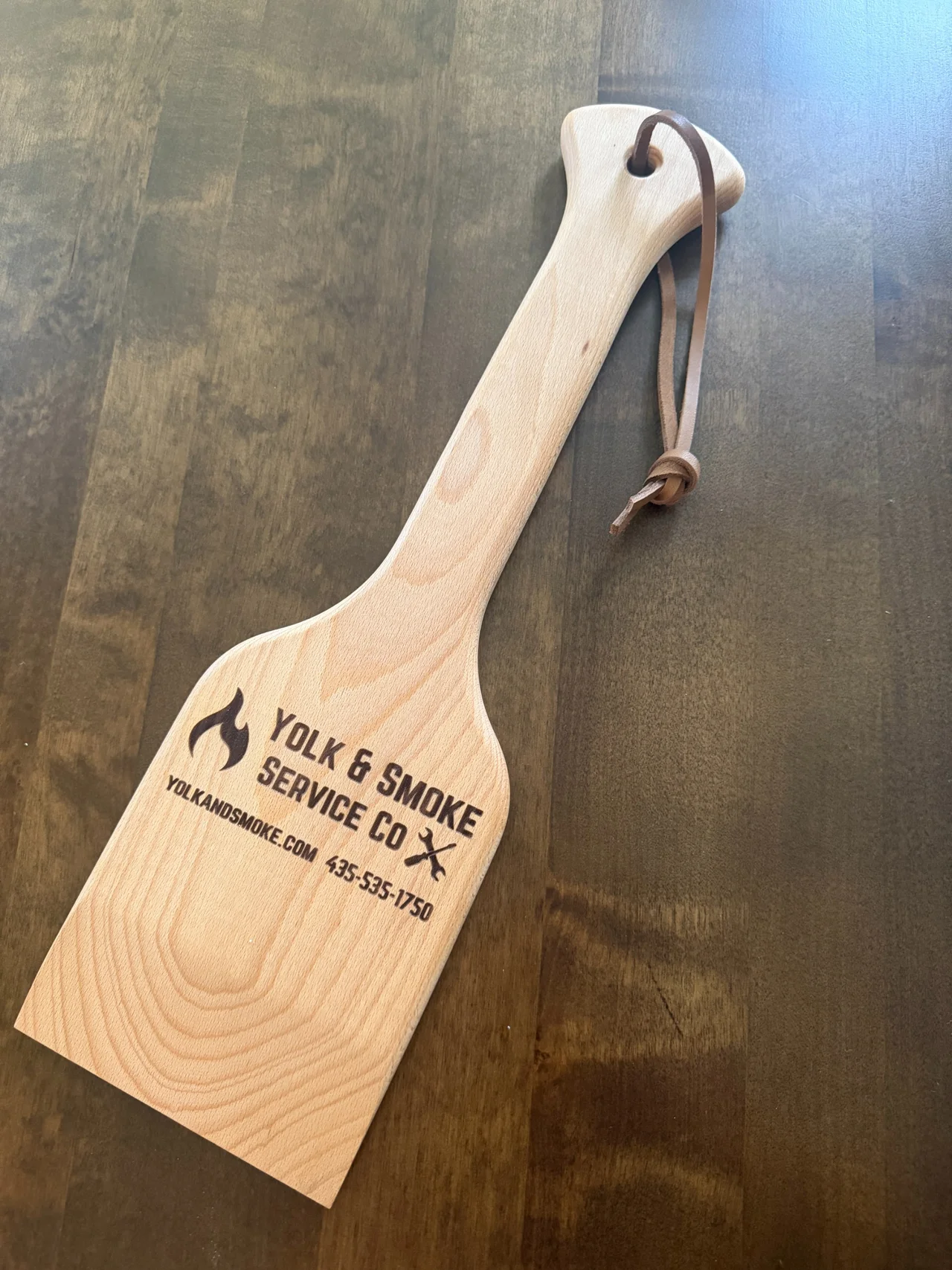
If you are ready to toss out dangerous wire brushes for good, upgrade your grilling kit with our Yolk & Smoke Wooden Grill Scraper.
Crafted from durable, premium hardwood, our scraper is built to withstand high heat and heavy scrubbing on any smoker or grill setup. It glides smoothly across hot grates, forming custom grooves that clean deeper with every single cook.
How to Clean Your Grates Safely with Wood
Using a wooden scraper is simple, but following proper timing ensures you get the cleanest grates with minimal effort.
- Preheat Your Grates: Fire up your smoker or grill and let the grates reach full cooking temperature. Heat softens rendered fat and carbon, making scrubbing effortless.
- Scrape with Firm Pressure: Hold the scraper at a 45 degree angle and press firmly as you move forward and back along the grates.
- Build Your Custom Grooves: During the first three to four uses, focus on pushing along the same grate lines. The heat from the bars will burn custom grooves into the wood edge.
- Wipe Down: Finish with a quick wipe using a paper towel lightly oiled with canola oil to leave a clean, non stick protective coating.
Frequently Asked Questions
Can you use a wooden scraper on a cold grill?
While a wooden scraper removes loose debris on cold grates, it works best on warm or hot grates. Heat softens baked on grease and allows the wood edge to conform smoothly to the shape of your grates.
How long does a hardwood grill scraper last?
A quality hardwood scraper lasts for years with regular use. Because the wood slowly adapts to your grates, it grows more effective over time without shedding or wearing down quickly.
Will a wooden scraper catch fire on a hot grill?
No. You are passing the scraper quickly across warm metal grates rather than holding it inside an open flame. As long as you do not leave the tool sitting directly on top of burning coals, it will not ignite.
Summary & Next Steps
Keeping your smoker clean does not have to compromise food safety or damage your investment:
- Ditch traditional wire brushes to eliminate the risk of loose bristles in your food.
- Avoid metal scrapers that chip porcelain or scratch stainless steel coatings.
- Use a solid hardwood scraper to enjoy a custom fit that protects your grates and cleans deeper every cook.
Protect your grates and keep your barbecue safe by picking up your Yolk & Smoke Wooden Grill Scraper today!